
language
PPR Pipe Production Line Introduction
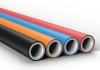

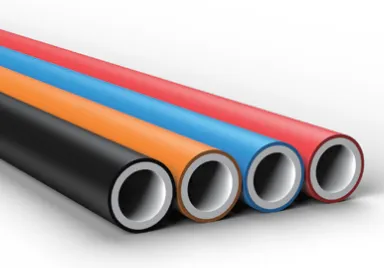
A PPR pipe production line is specially used to melt, extrude, cool and size random copolymer polypropylene (PPR) resin into finished pipes. It is widely applied in building cold and hot water supply, industrial fluid transportation and other fields. The whole production line consists of extrusion system, vacuum sizing & cooling system, haul-off system, cutting system and electric control system, featuring high automation and mature production technology.
1. Main Machine Composition
1.1Raw Material Handling System
Mixing Machine: Uniformly blend PPR raw material pellets with color masterbatch and additives to ensure stable color and physical performance.
Vacuum Auto Loader: Automatically convey raw materials to extruder hopper, avoiding dust pollution and manual feeding.
Dryer: Remove moisture from raw materials to keep water content below 0.03%, preventing bubble and silver streak defects on pipe surface.
1.2 Single Screw Extruder (Core Equipment)
Adopts specially designed screw and barrel for high-viscosity PPR material to realize even plasticization.
Sectional temperature control: Barrel temperature 160–190℃, die head temperature 190–210℃.
Wear-alloy screw with length-diameter ratio 33:1 ~ 40:1, ensuring stable extrusion and high output.
1.3 Die Head & Sizing System
Spiral Die Head: Spiral flow distribution structure ensures even melt flow, uniform pipe wall thickness and smooth inner & outer surface.
Sizing calibrator: Vacuum sizing mode guarantees accurate outer diameter and roundness with tolerance within ±0.1mm.
Vacuum Tank: Length 6–9m, vacuum degree -0.07~-0.09MPa; spray cooling rapidly solidifies pipe parison.
Cooling Water Tank: Multi-stage circulating cooling lowers pipe temperature below 40℃ for stable dimensional performance.
1.4 Haul-off Machine
Adopts servo motor for each caterpillar, providing stable traction.
Traction speed: 0.5–50m/min, infinitely adjustable.
Synchronous linkage with extrusion speed to ensure consistent wall thickness and straightness of pipes.
1.5 Cutting & Post-Processing System
Chip-Free Cutter: Planetary high-speed cutting, no burrs at pipe end, cutting length accuracy ±1mm.
Online Printer: Prints pipe specification, batch number, production date for quality traceability.
Stacking & Packing Rack: Automatic pipe arranging, stacking and bundling.
1.6 Electric Control System
Equipped with PLC and touch screen, centrally monitoring and controlling temperature, speed, vacuum degree and other parameters with real-time fault alarm.
Closed-loop control: Temperature fluctuation ≤±2℃, speed control accuracy ≤±0.5%.
2. Production Process Flow
Raw material (PPR pellets + color masterbatch) → Mixing → Vacuum Auto Feeding → Drying → Melting & Plasticization by Extruder → Pipe Forming via Spiral Die Head → Vacuum Sizing → Spray Circulating Cooling → Online Laser Printing → Haul-off → Chip-Free Cutting → Finished Product Inspection → Packaging & Warehousing
3. Key Process Parameters
3.1Extrusion Temperature: Feeding section 160–170℃, compression section 170–180℃, homogenization section 180–190℃, die head 190–210℃
3.2Screw Speed: 10–180r/min (adjustable according to pipe specification)
3.3Vacuum Degree: -0.07 ~ -0.09MPa
3.4Traction Speed: 0.5–50m/min
3.5Cooling Water Temperature: Inlet 15–25℃, Outlet ≤40℃
4. Production Line Features & Advantages
4.1High Efficiency & Stability: Single machine output 300–1200kg/h, stable extrusion with low defective rate.
4.2High Precision: Wall thickness deviation ±0.1mm, outer diameter tolerance ±0.2mm, fully compliant with GB/T 18742 national standard.
4.3Energy Saving & Low Consumption: Variable frequency drive and thermal insulation structure reduce unit energy consumption by over 15%.
4.4Multi-Purpose: Replaceable dies can produce PPR pipes in 20–110mm, also compatible with PE and PP pipe production.
4.5High Automation: Automatic batching, feeding, temperature control, traction and cutting, greatly saving labor cost.
5. Common Specifications & Applications
Pipe Specifications: Outer diameter 20/25/32/40/50/63/75/90/110/125/140/160mm, pressure rating PN10/PN16/PN20/PN25.
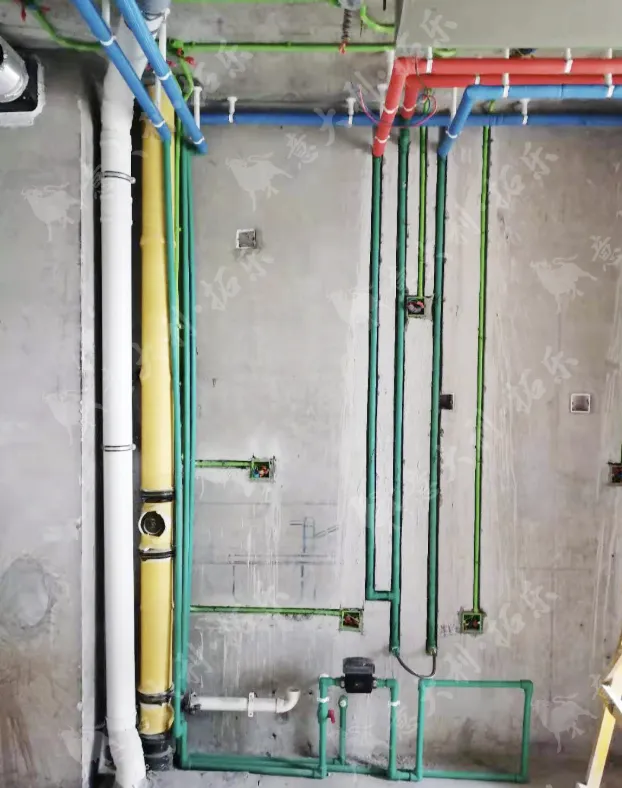
Application Fields: Building cold and hot water piping, floor heating system, industrial fluid transportation, compressed air piping, agricultural irrigation, etc.
6. Model Selection & Configuration Suggestions
Output Demand: Small size pipes (20–63mm) for home decoration: 300–400kg/h model; large engineering pipes (75–160mm): 400–600kg/h model.
Automation Grade: High-end full-automatic line with automatic batching and packaging; medium semi-automatic line with manual auxiliary packaging.
After-sales Service: Prefer suppliers providing technical support, formula guidance and turnkey project service.
Notes on Maintenance and Upkeep of PPR Pipe Production Line
1. Daily Pre-Startup Inspection
1.1 Check whether the power supply, circuit and terminals are loose, aged or leaking electricity.
1.2 Verify the oil level of lubricating oil, hydraulic oil and gearbox oil; check for oil leakage.
1.3 Inspect the water level, water circulation and water pump of vacuum tank and cooling water tank; ensure no pipeline blockage.
1.4 Check the tightness, wear and deviation of the haul-off caterpillar/belt.
1.5 Examine the cutter blade, travel switch and ink supply system of the inkjet printer.
1.6 Clean sundries around the die outlet; confirm the heating rings and temperature sensors are in good condition.
2. Daily Maintenance During Production
2.1Strictly follow the process temperature requirements; avoid long-time over-temperature operation to prevent decomposition and carbonization of PPR material.
2.2 Monitor real-time fluctuation of current, pressure, vacuum degree and haul-off speed; stop the machine timely for troubleshooting if abnormal.
2.3Keep the machine clean; clean up spilled raw materials, dust and overflow materials regularly to prevent entering transmission parts.
2.4Keep cooling water clean and discharge sewage periodically to avoid scale blocking the cooling pipeline.
2.5 Do not over-speed or force traction under overload, so as to protect the screw, mold and haul-off caterpillar.
2.6 Check pipe appearance and wall thickness at any time; adjust parameters immediately if uneven wall thickness, bubbles or scratches appear.
3. Shutdown Maintenance (Short-term & Long-term Shutdown)
3.1 Short-term Shutdown
Lower the temperature and screw speed first, and exhaust the residual material inside the barrel.
Turn off vacuum system, water pump, haul-off unit and cutter, then cut off power in sequence.
Wipe the die mouth and sizing sleeve, and clean residual material on the surface.
3.2 Long-term Shutdown
Thoroughly clean the machine, screw and die head to remove residual PPR material and prevent carbonization and caking.
Drain all water from water tanks and pipelines to avoid freezing and cracking in winter.
Apply lubricating grease to bearings, chains and gears for rust prevention.
Coat the cutter blade with anti-rust oil; cover the whole equipment for dustproof.
Cut off power, water and air supply; take dustproof and moisture-proof measures for the equipment.
4. Regular Lubrication Maintenance
4.1Bearings, transmission chains and guide rails: add high-temperature resistant grease every week.
4.2Gearboxes and reduction boxes: replace oil after the first 3 months of operation, then every 6–12 months thereafter.
4.3 Transmission parts of haul-off machine and cutter: check lubrication condition every month and replenish oil in time if insufficient.
4.4Clean dust from motor fans and heat dissipation openings regularly to ensure good heat dissipation.
5. Special Maintenance for Screw and Die Head
5.1Never allow hard metal objects to fall into the hopper to avoid scratching the screw and barrel.
5.2 When changing raw materials or pipe specifications, clean the machine gradually at low speed; do not force material pushing.
5.3 Use copper shovel or copper knife to clean residual material when disassembling the die head and flow splitter; do not strike hard with steel tools to avoid damaging the polished surface of the mold.
5.4 Check the wear degree of screw and barrel regularly; replace them in time if excessive wear occurs, to avoid poor plasticization and reduced output.
6. Electrical & Control System Maintenance
6.1 Remove dust inside the electric control cabinet regularly; keep it dry and well ventilated to prevent short circuit caused by moisture and dust.
6.2 Calibrate temperature controllers and thermocouples periodically; replace sensors timely if temperature deviation is too large.
6.3 Clean dust on inverters and PLC regularly; check whether wiring connections are overheated or loose.
6.4 Do not operate the control panel with wet hands to avoid water damage to electrical components.
7. Regular Replacement of Wearing Parts
7.1Haul-off belt/caterpillar, cutter blade, sealing rubber strip and vacuum sealing ring.
7.2 Worn parts inside sizing sleeve and water jacket; replace timely to guarantee pipe roundness and dimensional accuracy.
7.3Replace aging or failed heating rings and temperature sensors to avoid inaccurate temperature control.
8. Safety Operation Precautions
8.1Do not approach rotating parts such as die head, haul-off wheel and cutter during operation.
8.2 Cut off power completely and hang a maintenance warning sign before equipment overhaul and cleaning.
8.3 Keep away from high-temperature heating area to prevent scalds; operators must wear labor protection supplies.
8.4Non-professional personnel are not allowed to modify PLC and temperature control parameters at will.
Jwell Machinery
Contact : Andrew Shan
Phone / Whatsapp:+86 18851201053
Email:infssm@jwell.cn
Related News







Contact US
Product Information
Quantity
Unit
Piece
Support order samples, customization, wholesale direct, and complete payment. If the product you look for does not have corresponding customized content, pls fill out the form below to contact us, and we will reply ASAP.