
language
HDPE Solid Wall Pipes

1. Raw Materials
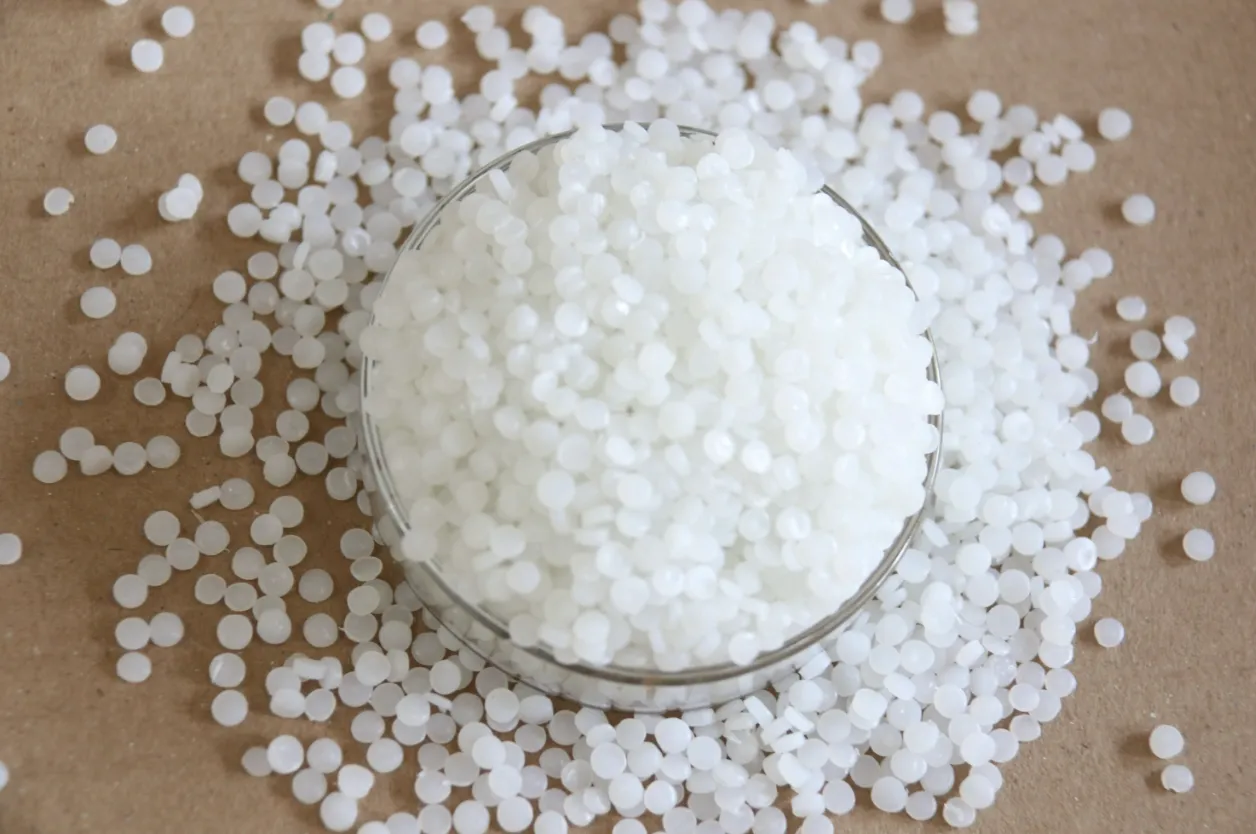
The base material is high-density polyethylene (HDPE) extrusion-grade resin. PE100 is the mainstream grade for municipal pressure pipes, while the earlier PE80 is being phased out. Its density ranges from 0.941 to 0.965 g/cm³.
· Basic additives: antioxidants and processing stabilizers. Carbon black is added for black pipes to resist UV aging. Blue stripes mark water-supply pipes, and yellow stripes mark gas pipes.
· Raw material for potable water: It must comply with drinking water sanitary standards, with no heavy metals or harmful substance precipitation. The inner wall resists scaling and microbial growth.
· Material characteristics: High toughness, good resistance to acids, alkalis and salts, free from electrochemical corrosion. It performs well at low temperatures and can withstand impacts down to -40℃, with good wear resistance. Limitations: continuous operating temperature ≤ 40℃. The allowable pressure drops as temperature rises, and creep occurs under long-term pressure with slow deformation.
· Applicable standards: GB/T 13663.2 for HDPE solid wall water supply pipes; GB 15558.2 for HDPE solid wall gas pipes.
2. Applications
HDPE solid wall pipe is a pressure-bearing pipe, different from non-pressure corrugated drainage pipes:
1. Transmission of domestic drinking water for municipalities, residential communities and industrial plants (PE100 water supply, blue stripe).
2. Medium and low-pressure urban gas transmission (special PE100 for gas, yellow stripe with strict safety control).
3. Industry: transportation of corrosive fluids such as acid/alkali chemicals, brine, circulating water and mineral slurry.
4. Agriculture: field irrigation, sprinkler and drip irrigation lines, often supplied in coils to reduce joints.
5. Trenchless works: horizontal directional drilling and pipe pulling for water supply, gas pipelines and pipe rehabilitation.
6. Others: seawater transportation and pressure process pipelines in wastewater treatment plants.
Not suitable for hot water or steam pipelines.
3. Construction Key Points
Connection Methods
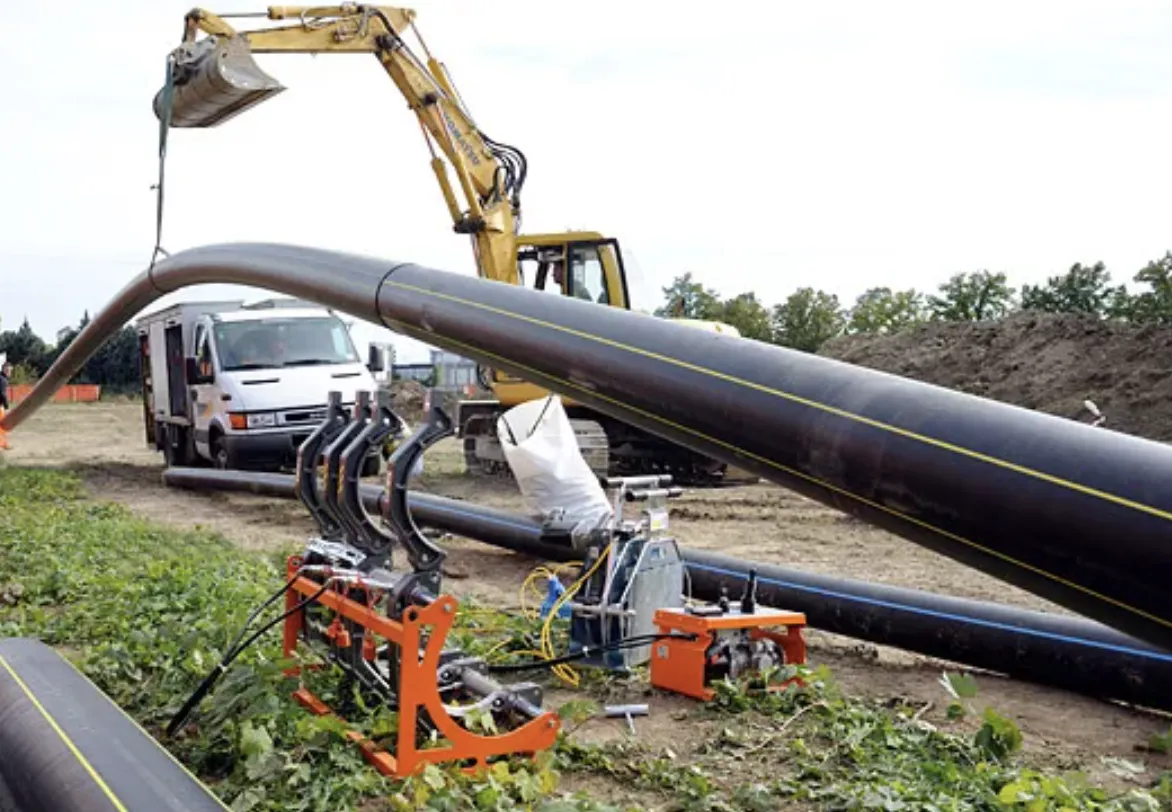
1. Butt fusion welding (preferred for DN75 and larger solid wall pipes) Pipe ends are faced and aligned, with misalignment ≤10% of wall thickness. Heating plate temperature is around 210℃. Remove the heating plate and apply fusion pressure quickly. Keep pressure for natural cooling. Forced water cooling, vibration or movement during cooling is prohibited. Cooling time is determined by wall thickness.
2. Electrofusion welding Commonly used for repair works, confined spaces and branch connections, widely adopted in gas projects. The surface oxide layer of pipe ends must be scraped off, and oil, mud and sand cleaned. Power is supplied to the fitting for fusion; clamps can only be removed after full cooling.
3. Socket fusion welding (for small-diameter pipes DN63 and below for water supply)
4. Steel-plastic transition / flange connection Used for dissimilar joints between HDPE solid wall pipes and steel pipes, valves, pumps and equipment.
Trench Installation
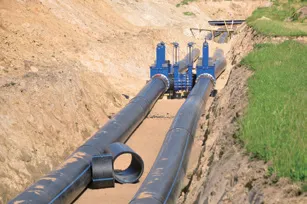
1. Trench bottom shall be leveled. Soft subsoil requires soil replacement. A sand bedding layer (normally ≥100 mm) shall be laid under pipes, free of rocks and sharp hard objects.
2. The pipe features good flexibility and can be laid in gentle curves to reduce elbows, subject to the minimum bending radius specified in standards.
3. Backfilling: Graded gravel or fine soil is preferred for the pipe haunch and upper bedding, compacted in layers. Heavy rollers are forbidden within 30 cm above the pipe crown.
4. Thrust blocks must be cast at elbows, tees and blank flanges of pressure pipelines to prevent joint separation caused by fluid thrust.
Pressure Test & Acceptance
For water supply pipes, hydrostatic test pressure is 1.5 times the design pressure, and pressure drop is monitored during stabilization in accordance with specifications. Gas pipes undergo tightness testing.
Construction & Storage Restrictions
· Long-term open-air storage under direct sunlight accelerates aging; cover for UV protection.
· Never heat pipes with open flame.
· Pipes with deep scratches shall be cut out and discarded; pipes with scratches exceeding limits cannot be used for pressure service.
· It has obvious thermal expansion and contraction; expansion allowance shall be reserved for long-distance laying.
Brief Advantages & Disadvantages
✅ Advantages: Light weight for easy transport and installation; monolithic fusion joints with low leakage risk; corrosion resistance for buried service, designed service life of 50 years; compatible with trenchless horizontal directional drilling.
❌ Disadvantages: Lower ring stiffness than steel pipes, vulnerable to sharp scratches; pressure capacity declines at elevated temperatures; creep property; large thermal expansion and contraction.

JWELL HDPE PIPE EXTRUSION LINE
Jwell Machinery
Contact : Andrew Shan
Phone / Whatsapp:+86 18851201053
Email:infssm@jwell.cn
Related News






Contact US
Product Information
Quantity
Unit
Piece
Support order samples, customization, wholesale direct, and complete payment. If the product you look for does not have corresponding customized content, pls fill out the form below to contact us, and we will reply ASAP.